
[vc_row][vc_column][vc_column_text css=””]
If you are working out how to ship a car from the UK, one of the most important decisions is choosing between RoRo and container shipping. Both methods are widely used for international vehicle transport, and each comes with its own advantages depending on the condition of your car, your budget, and what you need to bring alongside it. Understanding the real differences between the two, rather than assuming one is simply better than the other, makes it far easier to pick the right option for your specific vehicle and route. For a full introduction to RoRo shipping itself, visit our main RoRo shipping page.
RoRo vs Container Shipping Cost: Price Comparison from the UK
Cost is usually the first thing people think about when comparing shipping methods, so it is worth understanding what actually drives the price difference between the two.
RoRo Shipping Costs
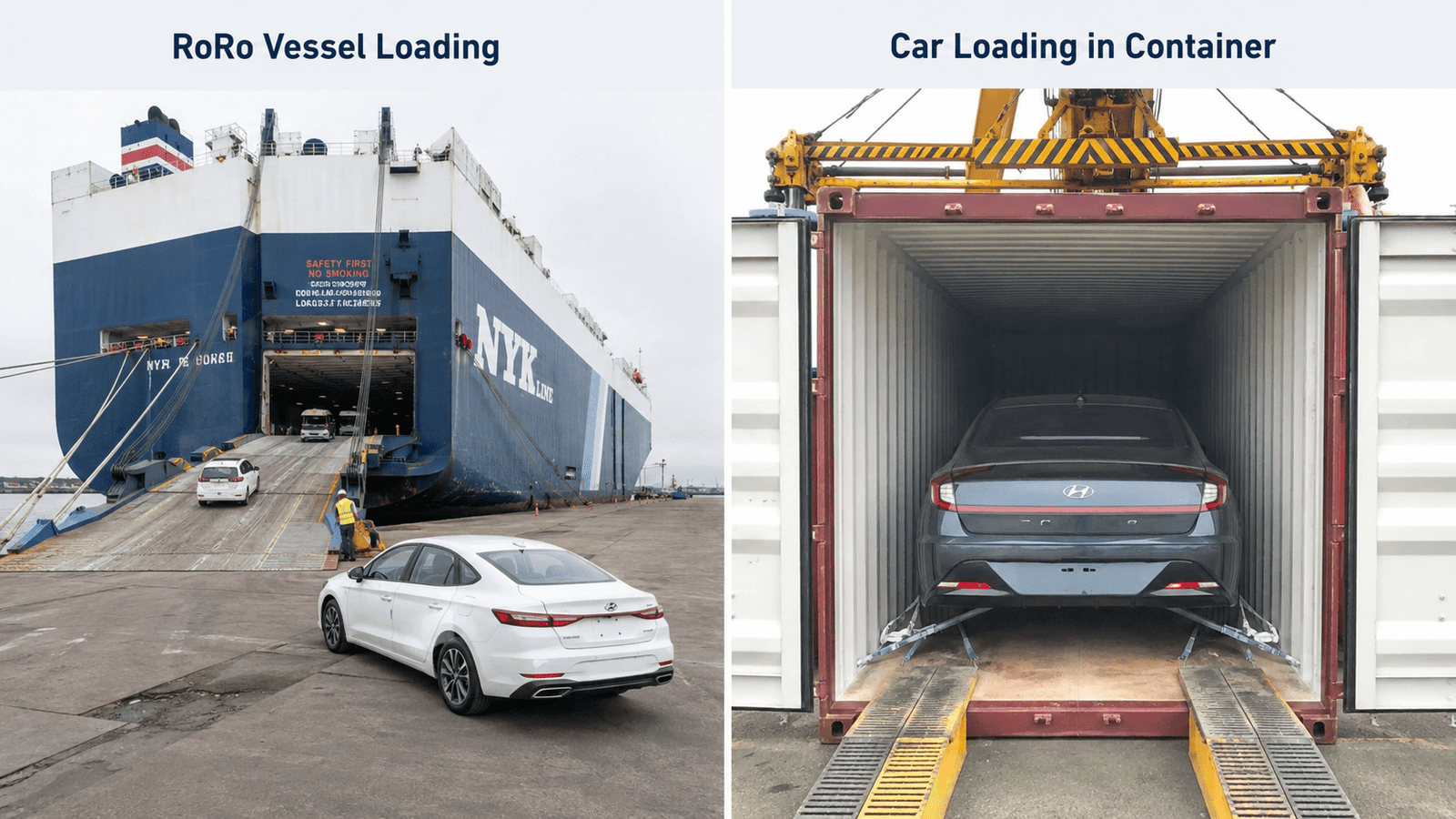
RoRo shipping is generally the more affordable option. Your car is driven onto the vessel, secured on deck, and driven off again at the destination port. Because you are only paying for the deck space your vehicle occupies rather than a dedicated container, this method usually works out cheaper for standard, running vehicles such as saloons, 4x4s, and vans.
Pricing depends on vehicle size and destination, with larger vehicles and longer routes generally costing more. For exact, up-to-date RoRo rates by destination, see our shipping prices page.
Container Shipping Costs
Container shipping costs more because your vehicle travels inside a sealed unit, either shared with other vehicles or dedicated entirely to your car. A shared container spreads the cost across multiple shipments, which can bring the price closer to RoRo levels, while a dedicated 20ft or 40ft container gives you exclusive use but at a higher price point.
Container pricing also varies by destination, container size, and whether you are shipping alongside personal belongings or other cargo. Rather than rely on general estimates, always check current container rates for your specific route or request a tailored quote.
Exact pricing for both methods depends on your vehicle type, destination, and current demand, so we always recommend checking our shipping prices page or requesting a quote rather than relying on general figures, since costs vary significantly by route and season.
RoRo vs Container Shipping: Which Is Safer and More Reliable?
Alongside cost, safety is a major factor when choosing between the two methods.
Safety of RoRo shipping. Your car is parked on an enclosed vehicle deck and secured with straps to prevent movement during the voyage. This offers solid protection for standard vehicles, though it is worth knowing that personal items are not permitted inside the car for RoRo shipments. Removing everything before collection is a standard requirement, which also reduces the risk of theft during transit.
Safety of container shipping. Container shipping offers a higher level of protection. Your vehicle is loaded into a sealed unit, sheltered from weather, dust, and contact with other cargo. This tends to make it the safer option for high-value, classic, or non-running vehicles. Container shipping also allows you to include personal effects or spare parts alongside your vehicle, which is not possible with RoRo.
Both methods are genuinely safe and reliable for the vehicles they are designed for. RoRo suits the average running vehicle well, while container shipping adds an extra layer of security and flexibility for vehicles or shipments that need it.
When to Choose RoRo
RoRo is usually the right choice when:
- Your vehicle is in full running condition
- You do not need to ship personal belongings alongside your car
- You want the more cost-effective option
- You want a faster, more straightforward process
RoRo also runs on regular, scheduled sailings, which tends to make booking and planning more predictable than container shipping on the same route.
When to Choose Container Shipping
Container shipping is usually the better fit when:
- Your vehicle is a non-runner or needs extra protection
- You want to ship personal belongings or spare parts alongside your vehicle
- You are exporting a classic, vintage, or high-value car
- Your destination is better served by container routes than RoRo
Container shipments can occasionally take longer due to loading schedules or additional customs checks, but they offer greater flexibility and security in return.
Availability by Port
Not every UK port handles both methods equally. Larger ports typically offer both RoRo and container services, while some smaller ports handle RoRo only. It is always worth checking with our team which options are available from your nearest departure point, since this can influence which method makes the most sense for your shipment. Our UK departure port guide breaks down which ports serve which routes.
RoRo vs Container Shipping: Side-by-Side Comparison
| Feature | RoRo Shipping | Container Shipping |
|---|---|---|
| Vehicle condition | Must be drivable | Can be non-drivable |
| Personal items allowed | No | Yes |
| Typical cost | Lower | Higher |
| Protection from elements | Moderate | High |
| Delivery speed | Generally faster | May take longer |
| Scheduling | Fixed sailing dates | Can vary |
| Security | Standard | Enhanced |

Both methods are reliable, but the right choice depends on your vehicle, your budget, and what you need to ship alongside it.
Documents Required for Both Methods
Whichever method you choose, you will need a core set of documents to ship your vehicle internationally:
- V5C registration certificate (logbook)
- Proof of ownership, such as a bill of sale or invoice
- Valid passport or photo ID
- Export declaration
- Import permit, where required by the destination country
- Insurance documents
If you are exporting permanently, UK law also requires you to notify the DVLA that your vehicle is leaving the country. Requirements can vary by destination, so always confirm the latest customs rules for your specific route before booking.
Frequently Asked Questions
What factors affect the cost of shipping a car internationally?
Cost depends on shipping method, vehicle size, destination, and seasonal demand. RoRo is generally cheaper than container shipping. Import duties, customs fees, and optional services like insurance or door-to-port collection add further cost at the destination end.
How long does it take to ship a car overseas from the UK?
Transit times vary by destination and method. European routes typically take under three weeks, while longer-haul destinations such as Australia or New Zealand can take five to seven weeks, depending on the vessel schedule and port chosen.
Can I ship an electric vehicle by RoRo?
No. Electric vehicles cannot travel by RoRo due to battery safety regulations. EVs must be shipped by container instead. Hybrid vehicles may be accepted on certain routes, so it is worth confirming eligibility with our team before booking.
Do I need marine insurance for my shipment?
Insurance is not legally required but is strongly recommended for both RoRo and container shipping. It protects against loss, damage, or handling incidents during transit, giving added peace of mind for higher-value or classic vehicles especially.
Get Your RoRo vs Container Shipping Quote Today
Both RoRo and container shipping are well-established, reliable ways to ship a car from the UK. Which one suits you depends on the condition of your vehicle, your budget, and how much security or flexibility you need.
For a fast, cost-effective option, RoRo shipping is quick, reliable, and available from almost all major UK ports. If you are shipping a non-operational or high-value vehicle, or need to include personal belongings, container shipping offers greater protection and flexibility. Whichever way you lean in the RoRo vs container shipping decision, Ascope Shipping supports both methods with the same level of care.
Ascope Shipping provides both RoRo and container shipping from the UK, backed by over 15 years of experience moving vehicles safely worldwide. Contact our team today, and we will help you choose the right method for your specific vehicle and route.
Call 01482 228366 or email sales@ascopeshipping.co.uk for a free, no-obligation quote.
[/vc_column_text][/vc_column][/vc_row]